
 In the above verses, we see that The Lord is commanding us to have a memorial of blowing trumpets every year on the first day of the seventh month of Tishri,(September), and He calls it a “holy convocation.”
In other words, a wedding rehearsal!

The offering that we make to Him on this day is an offering by “fire.”
In other words, our own lives are to be presented to Him as a living sacrifice. We allow the fire of the Ruwach ha’Qodesh (Holy Spirit) to purge and purify our lives so that we will be ready for the day when He returns to catch away His bride.
Jesus/Yeshua, is coming for a bride without spot or blemish. We must be purified by going through trials and tribulation in order to be ready for “The Day That No Man Knows!” At the conclusion of the 1,260-day ministry of the “Two Witnesses,” the “seventh angel” will sound (Revelation 11:15)
  and then the bride shall be changed in the twinkling of an eye at the “last trump.”

Revelation. (Chazown) 11:12-15 And they heard a great voice from heaven saying unto them, Come up hither. And they ascended up to heaven in a cloud; and their enemies beheld them… And the seventh angel sounded; and there were great voices in heaven, saying, The kingdoms of this world are become the kingdoms of our Master, and of his Mashiyach (Messiah); and he shall reign for ever and ever.
 Some scholars say there are 3 and some say 4, different trumpet blasts sounded on the Feast of Trumpets. The number “4” represents “the four corners” of the earth (the harvest field) and the “four angels” of the “four winds of heaven.”
 Chazown (Revelation) 7:1 And after these things I saw four angels standing on the four corners of the earth, holding the four winds of the earth, that the wind should not blow on the earth, nor on the sea, nor on any tree.
 These 4 types of trumpet blasts are as follows:

 Trumpet #1.) is called the Tekyiah (T’kiyah) The Tekiah – A pure unbroken sound that calls man to search his heart, forsake his wrong ways, and seek forgiveness through repentance.
 It can consist of one note (or blast) or it can be a low note near the fundamental tone of the horn that rises quickly about 3 notes higher. Finally, it can even be finished by a note that is a full octave higher.
Contrary to what is expected, it does not take a great deal of air to blow a shofar. The secret is the vibration of the lips (a minimum of 16 vibrations per second) that creates the vibration of air in the horn. The higher notes are obtained by tightening the lips.
Trumpet #2.)


The second sound is called the Shevarim (Sh’varim) Shebarim – A broken, staccato, trembling sound. It typifies the sorrow that comes to man when he realizes his misconduct and desires to change his ways. It sounds like a man moaning in repentance.
It consists of three blasts that are from the fundamental low to the next note up. Great playing shofars are ones that will produce three notes with relative ease. Some shofars (for various reasons) may produce only two notes and poor ones only one note. Each horn will have its own “voice” and sound in many keys. The texture of the finish, size, length and the diameter of the mouthpiece opening will vary the sound of the horn.
Trumpet #3.)


The Third sound is called the Teruah (T’ruah, teruwah) The Teruw’ah
It is Strong’s word #8643 8643 teruw` ah (ter-oo-aw’); from 7321 (ruah); clamor, i.e. acclamation of joy or a battle-cry; especially clangor of trumpets, as an alarum: KJV- alarm, blow (-ing) (of, the) (trumpets), joy, jubile, loud noise, rejoicing, shout (-ing), (high, joyful) sound (-ing). The same word is used for the “Shout” that is made with the voice! It was the “shout” of the shofars combined with the “shout” of the people that brought down the walls of Jericho. – A wave-like sound of alarm calling upon man to stand by the banner of Elohiym.
Teruah consists of 9 staccato notes in succession. It may be proceeded by a one-note tekyiah and may be finished by accenting the last note. Some will accent it and take it up a third. I believe that the Teruah is the “short blasts of alarm” as specified in Numbers 10:9.
Teruah means “an awakening blast”. A theme associated with Rosh HaShanah is the theme “to awake”. Teruah is also translated as “shout”.
In I Thessalonians 4:16-17 it is written: In I Corinthians 15:51-52 it is written:
“Behold, I show you a mystery, a sud,* we shall not all sleep, but we shall all be changed, in a moment, in the twinkling of an eye, at THE LAST TRUMP: for the TRUMPET (shofar) shall sound, and the dead shall be raised incorruptible and we shall be changed”
(sud* = deeper spiritual meaning, explained in an earlier post)
https://www.minimannamoments.com/the-rules-of-pardes/
Trumpet #4.) 
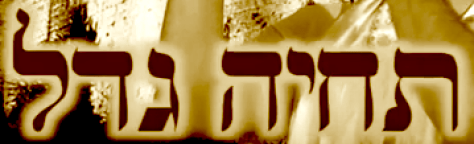
There is another blast called The Tekiah Gedolah (Great Tekyiah). – The prolonged, unbroken sound typifying a final appeal to sincere repentance and atonement.
Some consider a fourth sound but it is simply a tekyiah held as long as breath lasts or is appropriate. Some shofar blowers can hold a note for over a minute! This 4th Trumpet is “the last trumpet” sound made on the Feast of Trumpets and this represents “the four angels from the four winds of heaven and the four corners of the earth” as they gather the elect (Matthew 24:29-31). Seven trumpets (shofars) are sounded when God judges the earth during the tribulation. Judaism concerns itself with three shofar calls of God. They are called the first trump, the last trump and the great trump.
 The first trump was blown at Mount Sinai.
  The last trump is blown to signify the resurrection of the dead and may be blown on Rosh HaShanah.
  The great trump will signify the Second Coming of the Lord and is blown at Yom Kippur.
 According to other scholars, there are only two trumps, the first at Mount Sinai (Ex 19:19). and the last (great) that is blown by God (Yeshua) Himself at His return on Yom Kippur. (Isaiah 27:13, Zech. 9:14, Matt. 24:29-3I, 1st Thess. 4:16-17, 1st Cor. 15:52).
LISTEN HERE TO THE SOUNDS OF (Sounds take 10 seconds to begin.)
Once the horn of a ram, the shofar has been cut off and taken through a cleansing process, making it an instrument separated from any purpose other than responding to breath, (ruach), passing through its chamber. We the servants of the King, are maturing in the same process in the school of the Holy Spirit. (Ruach HaKodesh) From where specifically does the phrase last trump come?
In Judaism there are three recognized shofarim or ram’s horn trumpets.
They are the first Trump, the last trump, and the great shofar.
These shofarim should not be confused with the two silver trumpets called chatzatzerah in Numbers chapter 10.
The first trump and the last trump relate to the two horns of a particular Ram. According to Jewish tradition the Ram was caught in the thicket on Mount Moriah when Abraham was ready to slay Isaac and offer him up as a burnt offering.
This ram became the substitute and was sacrificed in place of Isaac, even as Yeshua the Messiah became the substitute for us and provided Life for us through His death.
In Pirke deR’Eliezer, (a rabbinic work,) it was said the left Horn, (first- trump), was blown on Mount Sinai when the Torah was given and it’s right horn, (the last trump), will be blown to herald the coming Messiah/Moshiach. The Midrash, (Hebrew Commentary), claims that the two horns of the ram became the two trumpets, which in Hebrew is, the shofarot of God.
The right horn was larger than the left, and thus concerning the days of Moshicah it is written,’on that day, a great shofar will be blown.’ (Tz’enah Urenah) Was not the ram burnt as a burnt offering together with its horns, skin and flesh? So how are there horns?
The answer is that undoubtedly God performed a miracle and created a new ram out of the ashes. The Ram was resurrected! Some believers have suggested that it is a reference to a prophetic vision. Perhaps what is being implied is that when Abraham looked up, he saw not only this ram caught in the thicket, but he saw a future sacrifice, one that would come long after his day.
“Your father Abraham rejoiced to see my day: and he saw it, and was glad.” (John 8:5-6)
What did Abraham see? Perhaps he saw the Lamb provided by God.
Was this particular ram created for this purpose since the first days of creation? In other words, Isaac’s ram was prepared for sacrifice since the foundation of the world. In the same way, Peter described the Master as “a lamb without blemish or defect, chosen before the creation of the world.” (1st Peter 1:19-20)
THE THREE TRUMPETS (SHOFARIM) OF GOD
The three great trumpets (shofarim) that mark MAJOR events in the redemptive plan of God are associated with days in the Biblical calendar. The FIRST TRUMP is associated with and was seen as being blown by God on the feast of Shavuot, (Pentecost), when God gave the Torah at Mount Sinai.
In Exodus (Shemot) 19:18-19 it is written:”And mount Sinai was altogether on a smoke, because the Lord descended upon it in fire: and the smoke thereof ascended as the smoke of a furnace, and the whole mount quaked greatly. And when the voice of the TRUMPET sounded LONG and waxed LOUDER and LOUDER, Moses spake, and God answered him by a voice” Patterns of sound, released from this instrument in faith and understanding and at the direction of the Holy Spirit, is one of the most powerful agents of change on the planet. Spiritual forces in the heavens understand fully and must respond to that sound. Portals/windows and doors in the heavens are opened and earthly atmosphere becomes charged with the power of the Most High.
 Spiritual forces and obstacles resisting His kingdom are removed, the heavens shift, walls fall down, and His people move forward to possess their inheritance and fulfill their destiny. All of creation longs for the mature ones of God to awaken and appropriate the sound of the victory won. נִצָּחוֹן (nee-tsah-KHOHN) is a victory.

Netzah is the Hebrew word for victory, or endurance; it represents God’s active grace in the world. The name YHVH Tza’va’ot is associated with Netzah.
The trumpets of Israel announced the coming of kings and kingdoms, the approaching of armies. So it is prophesied that when the trumpet sounds, the kingdom of God will come.
The trumpets called the people of Israel to gather before God. So it is prophesied that at the sound of the trumpet, God’s people will be gathered up to His presence. The sound of the trumpet was a wake-up call. So it is foretold that when the trumpets sound, the dead in Messiah will be awoken.
Lastly it was the sound of the trumpet that announced the beginning of the kings reign. So it is foretold that when the trumpet sounds, the reign of the King will begin, the kingdom of this world will become the kingdom of the Lord. The Feast of Trumpets/Yom Teruah/Rosh HaShanah and the Holy days of autumn are just as much a part of the Re-New-ed Covenant, as are the Holy days of spring.
They tell us that our faith, is not only in what was, but is in what is yet to come, as in Messiah. We live FROM salvation and yet, TO redemption, and we are above all, a people of hope. Flesh and blood cannot inherit the kingdom of God and the perishable cannot inherit the imperishable but there is a mystery awaiting us all….. at the sound of the last shofar in the twinkling of an eye the dead will be raised and transformed into immortal bodies. Techiyat ha-metim.
  When this happens death itself will be swallowed up in victory. Since Jesus our Lord delivered us from the curse of the laws verdict against us, on account of God’s love and grace; then we can rejoice that love is stronger than death. The ultimate victory over the ravages of sin will forever be reversed on behalf of Jesus our Lord and Redeemer.
 Your kingdom must now come on earth as it is in heaven.
The very last time that the word “trumpet” is mentioned in scripture is in Revelation 9:14 and it is when the four angels from the four winds of heaven are about to be loosed to gather the bride (the elect). This trumpet is about redemption! The first time God who called Himself, I AM / YHWH / Yaweh (YaHuWaH) established covenant with Abraham in Genesis 15:9, a three-year old ram was killed (symbolic of the three year ministry of Messiah). When Abraham offered up his son Yitzchaq (Isaac) to I AM / Yaweh / YaHuWaH, a ram was seen with his horns “caught” in the thicket as a substitute offering. so the “trumpet” or the “ram’s horn” is prophetically connected to covenant, redemption, freedom and deliverance!
 The term, ‘blowing our own trumpet’, is used in modern vernacular, as telling everyone proudly about your own achievements in a boastful way.
This is the world’s way, not the Lord’s Way. However as believers in Jesus our Messiah, it is indeed time to ‘blow our own trumpets’ …
 and in this instance it’s OK!… for the King is Coming!
If you’re not certain you are ready for His return, don’t leave this site without being sure. Go to the link below.. for you are precious to the Lord and greatly loved. Blessings and Shalom!


 Johanan ben Zakai on the


 We live free because of the brave and because of the courage of those who would protect us with everything they have.


 As believers it is important to see the relevance to us. The instructions and ultimate plan of God as laid out in the old covenant/testament.
 Also called the feast of Booths which is the meaning of Hebrew word Sukkot,
 it celebrates the fall harvest with the third first fruits of the growing season.
  During Sukkot, and each family built a Sukkah, (which is the singular of Sukkot;) or booth, outside the home. This is an activity still practiced today. Lev. 23:39


 Due to cultural traditions we have little idea in the west, what a


 T
T
 There is reason to believe that during the time when the Temple stood, a total of 70 sacrifices were offered during the seven days of Sukkot which are celebrated in the Land of Israel.

 The plans and purposes of God have only perfect ends.
 All Scripture is written on kosher scrolls not in books.
  So to understand the reference in Revelation, consider that

 The old has gone, the scroll finished, for the story is completed and the day after the end,
  Before the scroll is rolled up, the last words written are from the final reading in Deuteronomy. They are concerning the end of a particular journey.
 he was looking towards the place where the Temple would one day stand.

 (
(


 The Hebrew Holy Day of


You must be logged in to post a comment.